Volhynian Polesia is mostly horizontal: forests, wetlands, flatlands to the horizon. But in its north-western corner more than thirty lakes are clustered together, and among them is one that is four times deeper than the Sea of Azov.
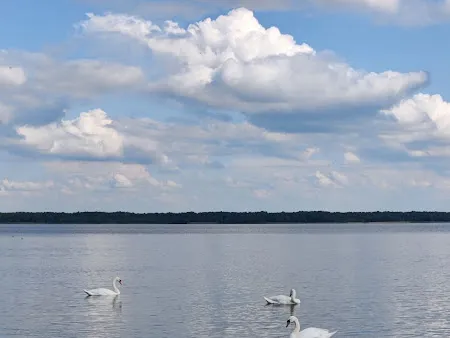
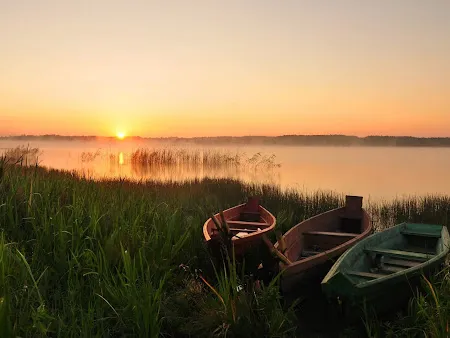
The Shatsk Lakes are not a resort and not an amusement park. This is a landscape where nature has barely ceded ground to people. Bilberries and cranberries grow here, swans nest, the water in Svityaz is clear to the bottom, and in the evenings mist hangs over the lake.
General Information
| What? | Description |
|---|---|
| Name | Shatsk Lakes (Shatsk Lake District, Svityaz Lakes) |
| Location | Kovelsky district, Volynska oblast (Shatsk urban-type settlement and surroundings) |
| Number of lakes | 30+ (28–30 depending on the count; 23 within the national park) |
| Total water surface | >23 sq miles (>60 km²) |
| Largest lake | Svityaz (9.7 sq miles / 25.2 km², depth up to 192 ft / 58.4 m) |
| Shatsk National Park | 80,300 acres (32,500 ha), founded 1983 |
| Protected statuses | Ramsar Convention (1995), UNESCO Biosphere Reserve (2002), trilateral reserve “Western Polesia” (2012) |
How the Lakes Formed
Most of the Shatsk Lakes have glacial-karst origin: about 12,000–15,000 years ago the glacier retreated, leaving depressions in the chalk bedrock. These depressions gradually filled with water.
Lakes lying among wetlands formed differently — through alluvial accumulation and rising groundwater. That is why among the thirty Shatsk Lakes there are both deep karst lakes and very shallow boggy ones — they are different types of water bodies, brought together by the same geological zone.
An older version exists too — marine. In the first half of the 19th century the scholar Eichwald wrote that the Shatsk Lakes are remnants of an ancient sea that once covered Polesia. There is no confirmation of this, but an echo of the idea lives on in local legends: the people of Polesia say that “long ago there was a sea here, whales lived in it, then it dried out — and the lakes were left.”
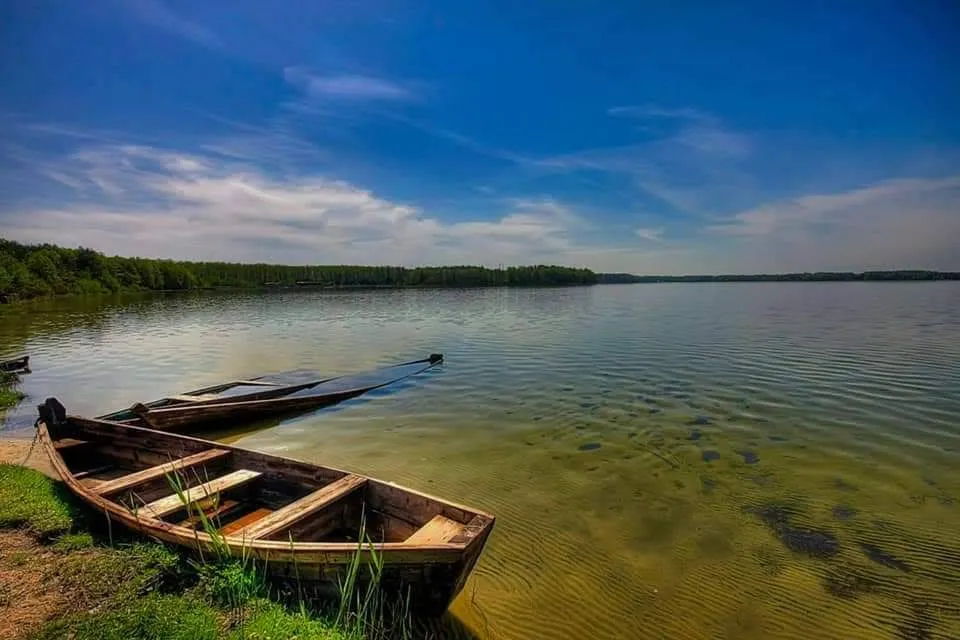
The Main Lakes
Svityaz — the “Ukrainian Baikal”
Svityaz is Ukraine’s deepest and largest natural lake. Area — 9.7 sq miles (25.2 km²), maximum depth — 192 ft (58.4 m). Length — more than 5.5 miles (9 km), width up to 2.5 miles (4 km).
For comparison: the Sea of Azov averages 23–26 ft (7–8 m) deep. Svityaz is four times deeper.
Origin — karst: a depression formed in the chalk bedrock and was filled by underground and atmospheric water. The result — crystal clarity. First-class water, clear to the bottom even at significant depths. The name, according to the most widespread version, comes from the Slavic root “svit” — “light.”
In the middle of the lake is an island that locals call the “Island of Lovers.” They say underwater paths lead to it, but no one knows where they are.
Pulemetske
The second-largest — 6.3 sq miles (16.3 km²), average depth 13 ft (4.1 m). Shallower than Svityaz, but large and wide-open. Vendace have been introduced here — a fish unusual for Polesia.
Luky, Lyutsymyr, Pisochne
Luky — 2.6 sq miles (6.8 km²), Lyutsymyr — 1.7 sq miles (4.3 km²), Pisochne — 0.7 sq miles (1.86 km²) (average depth 10 ft / 3 m). Pisochne is special: rock bass has been acclimatised here, and it is popular with anglers and holiday-makers.
Krymne
Smaller and less well-known — but there is an island in the middle of the lake, and according to legend a wooden underwater road from the bank once led to it. Princes supposedly travelled along it to a church that stood on the island. During excavations, wooden beams and stones were found here.
Shatsk National Park and Conservation
Shatsk National Nature Park was founded in 1983 — one of the first in Ukraine. Area — 80,300 acres (32,500 ha).
The park holds four levels of conservation status:
- Ramsar Convention (1995) — wetlands of international importance, primarily as breeding habitat for waterfowl: wild ducks, geese, swans.
- UNESCO Biosphere Reserve (2002) — resolution of the 17th session of the “Man and the Biosphere” programme.
- Trilateral Biosphere Reserve “Western Polesia” (2012) — shared with the Polish reserve “Western Polesia” and the Belarusian “Pribuzhskoye Polesye.”
The park has officially documented traces of Palaeolithic humans on the shore of Svityaz — found as long ago as 1871 by the scholar Zavyshy. The lake beds are covered with sapropels — centuries-old bottom sediments with industrial and therapeutic value.
Lake fauna: eel, perch, pike, tench, bream, crucian carp, carp, catfish, loach, crayfish. In certain lakes — channel catfish, rock bass, pike-perch, vendace.
The Threat: the Khotislavsky Quarry
The greatest ecological threat to the Shatsk Lakes is not tourists and not anglers.
In 2008, in Belarus, 16 miles (26 km) from Svityaz, one of Europe’s largest sand and chalk deposits was discovered. Since 2009 the Khotislavsky Quarry has been operating there: sand extraction currently runs to a depth of 33–39 ft (10–12 m) over an area of 11 acres (4.5 ha). But the project calls for chalk extraction to a depth of 148 ft (45 m) over 124 acres (50 ha), with operations lasting more than 30 years.
The problem: the quarry is located in a karst zone connected to underground aquifers that feed the Shatsk Lakes. In summer 2019 Svityaz dropped sharply in level — and although scientists have not established a definitive causal link with the quarry (according to NAAS researchers, no direct impact has yet been found), everyone understands that at full extraction depth the situation could change.
After 2022 any coordination with Belarusian conservationists ceased — an additional complication.
What to Do and Where to Go
The Shatsk Lakes are primarily about recreation on the water and in the forest. But there are specific points of interest:
Lake Svityaz — the main stop. Beaches, holiday centres, clear water. Four official recreation zones: “Hryada,” “Hushovo Grove,” “Pisochne,” “Svityaz.”
Lake Pisochne (village of Melniky) — quieter, less developed; for those seeking fewer people.
Lake Krymne — relatively little known, there is an island, forest, a nature reserve zone; for those who want nature without the resort.
Lake Pulemetske (village of Pulmo) — large open water, exposed, windy; good for kayaking.
Cycling routes: an official loop through six lakes — Svityaz, Pisochne, Luky, Pulemetske, Ostrivyanske, Klymivske — and an old wooden church in the village of Ostriv’ya.
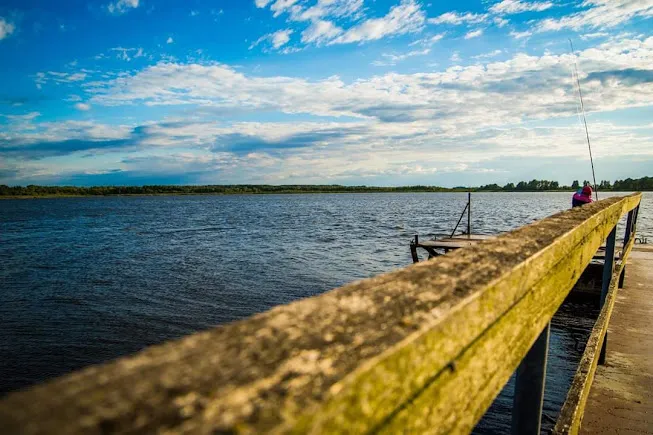
Fishing: regulated and paid on most lakes; rock bass in Pisochne, vendace in Pulemetske.
Where to Stay
The best-developed infrastructure — Shatsk urban-type settlement (district centre): hotels, sanatoria, pharmacies, supermarket.
On the lake shores: holiday centres, boarding houses, a very well-developed private rental sector, campsite areas.
The best-known facilities: “Shatsk Lakes” resort, “Lisova Pisnya” sanatorium, “Svityaz-Tsentr.”
Book ahead — especially in summer and on weekends: the region is very popular.
Practical Information
- Beach entry: partly paid within the national park
- Fishing: paid; licence required
- Prohibited: washing vehicles in the water, grazing livestock, lighting fires in the shoreline forest
- Best time: May–June and September — fewer people, water warm; July–August — peak season
Getting There
- From Lutsk: ~60 miles (~100 km, 1.5 hrs) via Kovel or directly to Shatsk
- From Kyiv: ~270 miles (~430 km); E40 to Rivne → Lutsk → Kovel → Shatsk; ~5 hrs
- From Lviv: ~175 miles (~280 km); via Lutsk or via Ustyluh; ~3.5 hrs
- By train: to Kovel, then bus to Shatsk (~31 miles / ~50 km, services available)
- National park address: Shatsk urban-type settlement, Volynska oblast
Little-Known Details
- The Shatsk Lakes constitute one of the largest lake clusters in Europe — not just Ukraine.
- 86% of the Shatsk Lakes are “shallow” (under 10 ft / 3 m deep). This applies to most of the wetland lakes between the forests. The deep Svityaz is the exception, not the rule.
- First scientific descriptions of the lakes — 1830, by the scholar Eichwald. First publication on Svityaz in Brockhaus and Efron — 1900.
- On the shores of the Shatsk Lakes there are research stations of Lviv University and Lesya Ukrainka University (Lutsk) — regular scientific studies continue.
- In the 1960s–70s active drainage reclamation was carried out on the Shatsk lake district — it led to the shallowing of several lakes and wetland degradation. Some of the damage was offset by re-naturalisation in the 2000s.
- Sapropels on the lake beds (therapeutic mud sediments) have industrial and medical significance.
Conclusion
The Shatsk Lakes are not simply a resort destination. This is a system that formed over 12,000 years and is now protected simultaneously by three international conservation regimes.
People come here for silence and water. But it is worth knowing: this water is under threat, and there is no longer anyone on the other side of the border to negotiate with.
While Svityaz exists — it is worth seeing.