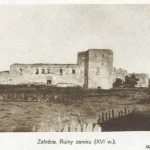
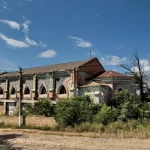
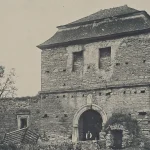
Among the hills of the Borshchiv area, amid fields and scattered farmsteads, stands a church larger than you’d expect from such a small village. Larger — and emptier.
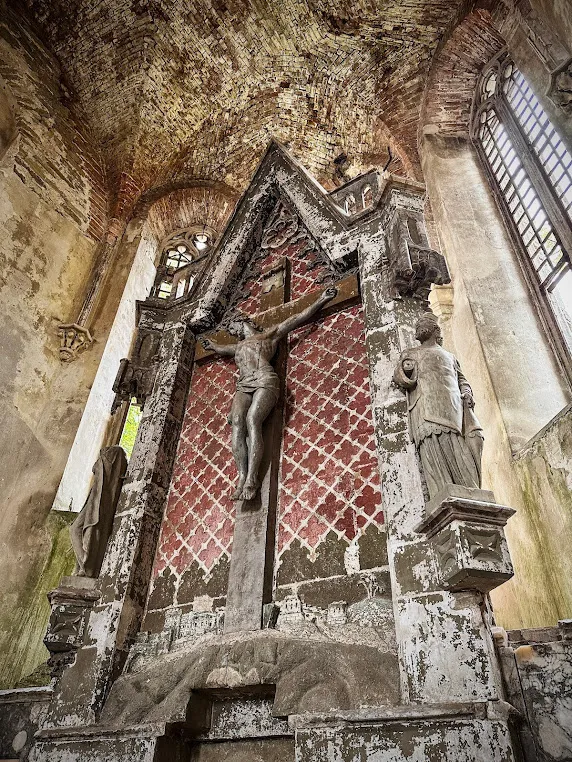
No services have been held here since 1945. There’s no Catholic congregation left. But someone still brings fresh flowers and lays them beneath the crucifix on the altar.
That’s exactly why it’s worth the trip.
General Information
| What? | Description |
|---|---|
| Name | St. John Nepomucene Church (also mistakenly called “Saints Peter and Paul”) |
| Location | Turylche village, Chortkiv district (the Borshchiv area), Ternopil Oblast |
| Type | Roman Catholic church |
| Built | 1871 |
| Style | eclectic: neo-Gothic with Renaissance elements |
| Commissioned by | Count Jan Starzeński |
| Patron saint | St. John of Nepomuk |
| Status | architectural monument of local significance; inactive since 1945 |
John of Nepomuk: Who He Was, and Why He’s Here
John of Nepomuk was a 14th-century Czech priest, martyr, and Catholic saint. According to tradition, he was thrown into the Vltava River for refusing to reveal the queen’s confession. He became the patron saint of confessors and bridges, and was enormously popular across Central Europe and Galicia.
His cult spread through Podillia in the 19th century, under Austrian and Polish influence. Count Jan Starzeński, who financed the church, dedicated it to his own heavenly patron — a personal and literal act of devotion: Jan building a church for John.
Who Built It, and Why
At the time of construction in 1871, Turylche belonged to the Iwanowski landowning family, who had bought it from the Potocki family in the late 18th century and held it until 1939. But the church wasn’t built by the estate’s owner — it was built by Count Jan Starzeński, entirely at his own expense.
The church served not just Turylche but the parish of neighboring villages as well: Verbivka, Pylypche, Slobidka, and Triitsia. On the eve of World War II, it counted around 500 congregants — a substantial number for a handful of small villages. For a community of 700 in Turylche itself, the church would have looked remarkably large and monumental.
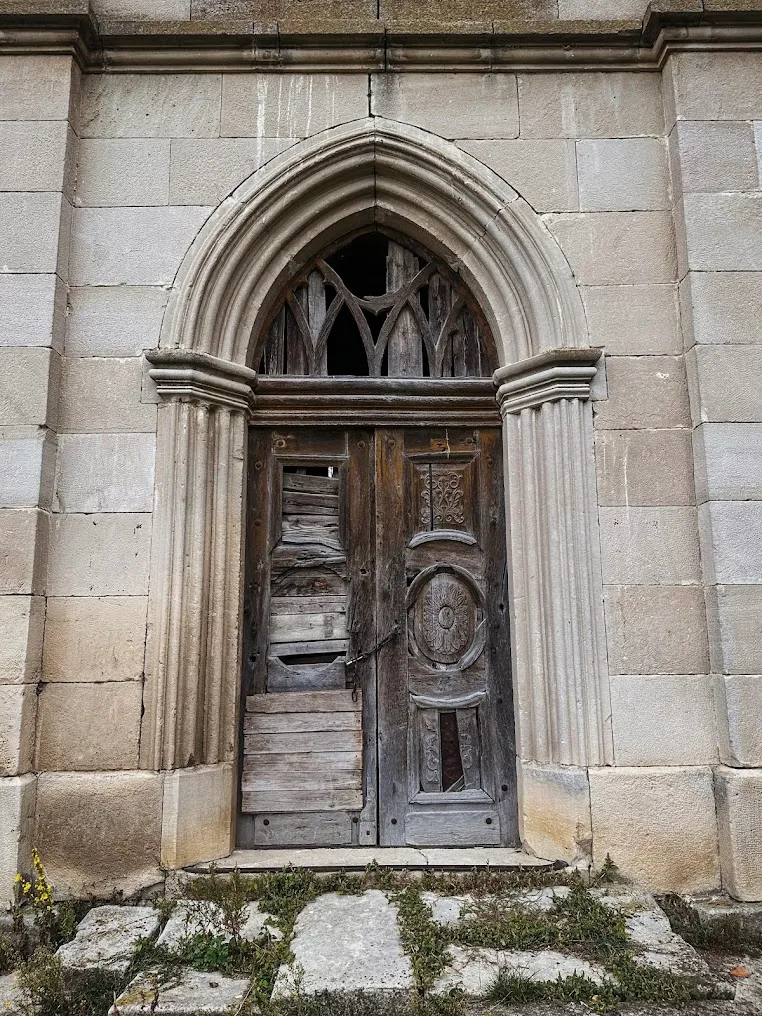
Architecture: a Church That Doesn’t Look Like Podillia
The building immediately looks out of place against its surroundings — and it is.
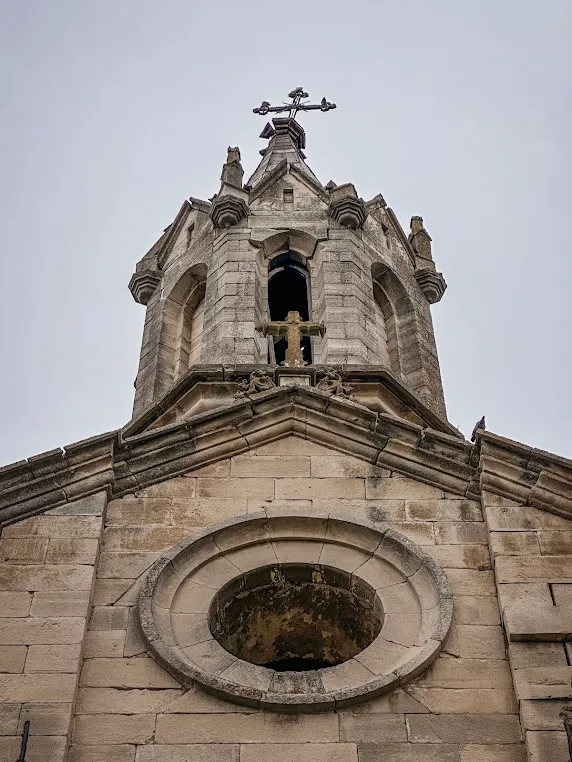
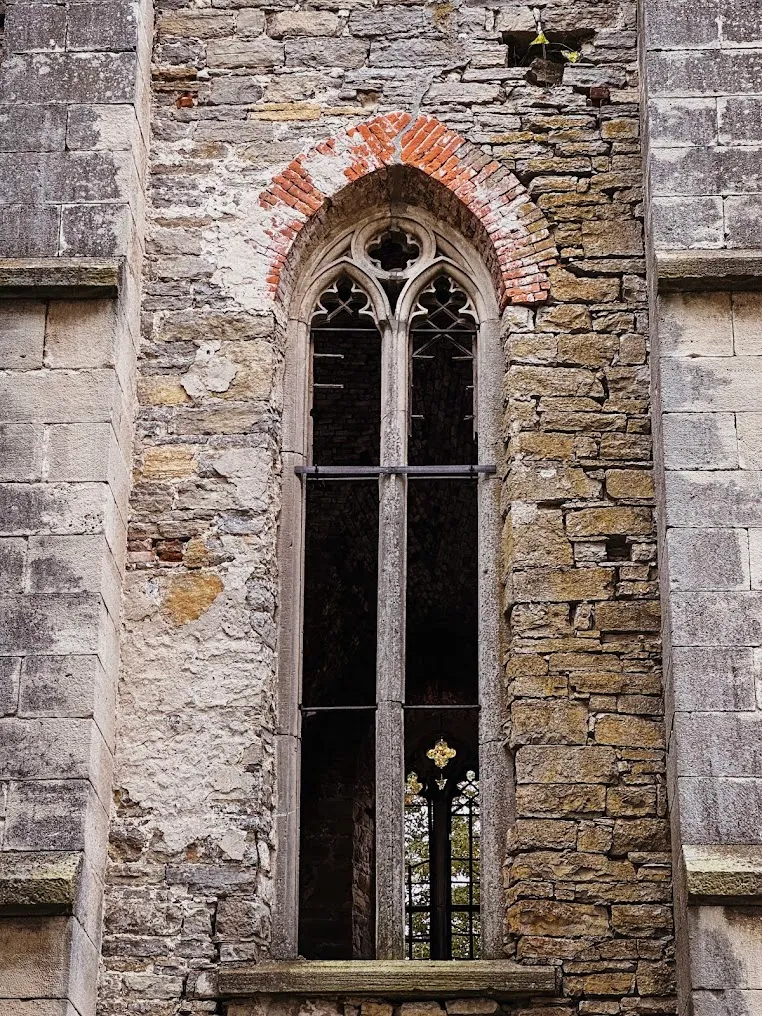
Its style is eclectic: neo-Gothic with Renaissance elements. Slender pointed-arch windows, a sharply vertical silhouette, a spire topped with a cross, a deep portal — all of it closer to Central European urban churches than to rural Podillia architecture.
On the façade, flanking the main entrance, are niches holding statues of the apostles Peter (holding a key) and Paul (holding a sword). These statues are the source of a common mix-up: most old guidebooks and online sources mistakenly call the church “Saints Peter and Paul.” This is incorrect — the church has been dedicated to St. John of Nepomuk from the start, and remains so today.
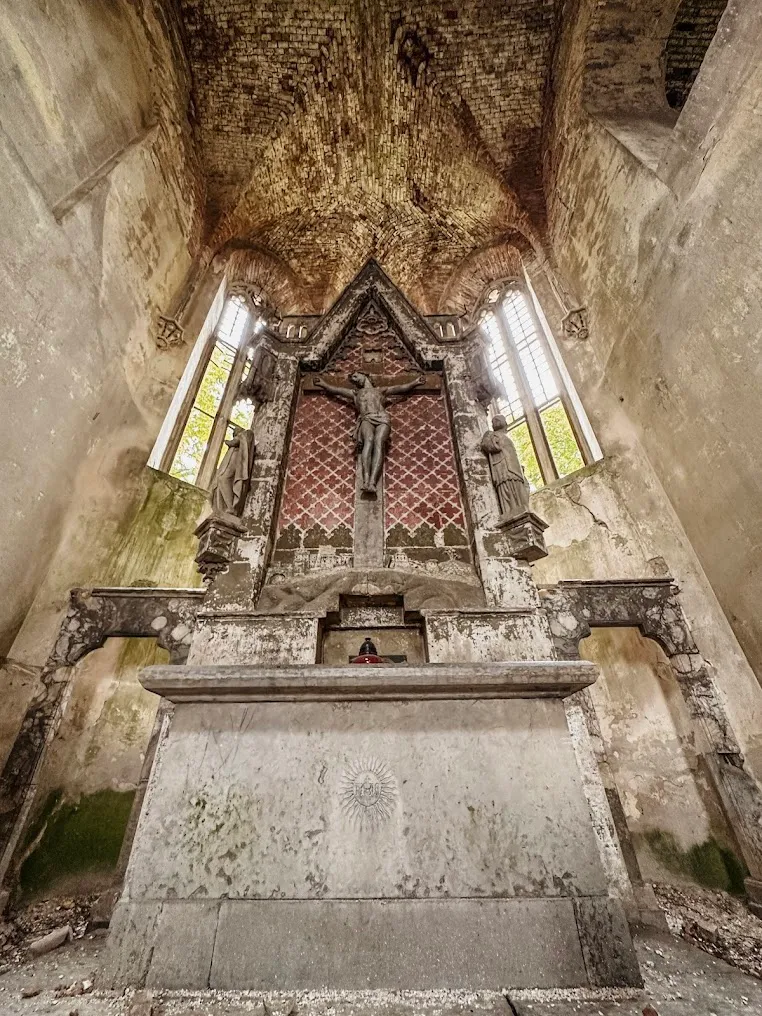
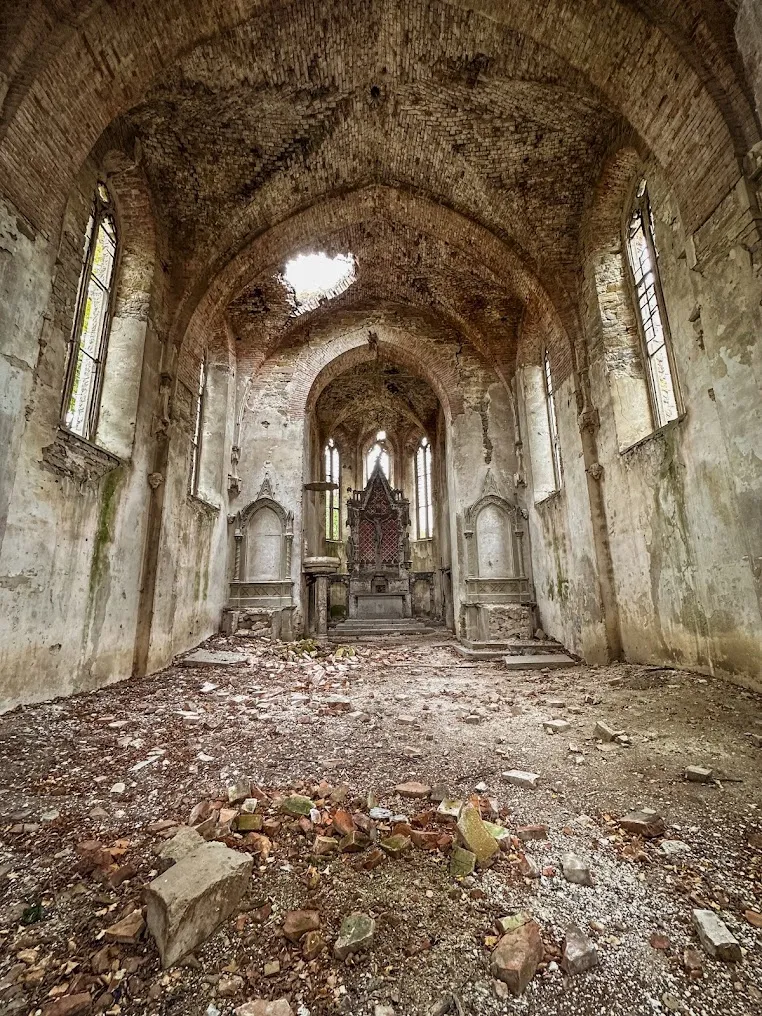
Inside, a carved altar with a crucifix and figures of the apostles on either side has survived to this day. A unique image of John of Nepomuk himself survives on the altar.
After 1945
Services stopped in 1945, after the Polish population left or was resettled. During the Soviet period, the building served as an agricultural warehouse.
Today, the doors have long since been broken off. Entry is unrestricted, through a side passage. Large holes have opened in the brick vaults. Trees more than 8 inches (20 cm) in trunk diameter grow on the roof. The deterioration deepens every year.
Its status is a monument of local significance. No restoration funding has been allocated.
Fresh Flowers
The most striking detail here isn’t the architecture.
Despite the fact that there’s no longer a Catholic congregation in Turylche, someone still regularly brings fresh flowers into the church and lays them beneath the crucifix. No explanation. No words. Just a gesture that says: this place hasn’t become entirely empty yet.
Locals say that on Easter, people still come to the old church — cross themselves, and continue on to the Orthodox church. There’s something very Podillia about that: different pages of the same history, standing side by side, not interfering with one another.
What to See Nearby and How to Fit It Into a Route
Turylche sits in the Borshchiv area, one of the most tourist-rich districts of the Ternopil region:
- Chervonohorod Castle (~12 miles / ~20 km) — picturesque ruins above a canyon
- Dzhurynsky Waterfall (~9 miles / ~15 km) — the largest lowland waterfall in Ukraine
- Buchach (~19 miles / ~30 km) — a town hall, castle, and monastery
- Skala-Podilska (~9 miles / ~15 km) — a castle above the Zbruch
Practical Information
- Admission: free, unguarded
- Getting inside: through the side entrance (the doors are broken off)
- Interior condition: structurally unsafe — holes in the vaults, trees on the roof; take care
- Exterior viewing: safe, but stay alert near the walls
- Time needed: 20–40 minutes
- Infrastructure: none — the nearest café is in Borshchiv (~16 miles / ~25 km)
How to Get There
Turylche is in Chortkiv district (the Borshchiv area), Ternopil Oblast.
- From Ternopil: ~87 miles (~140 km) via Chortkiv and Borshchiv
- From Skala-Podilska: ~9 miles (~15 km) via Nyvra to Hermakivka — Turylche
- From Borshchiv: ~16 miles (~25 km)
- The road to Turylche is paved but narrow, requiring caution. Parking is on the shoulder near the church.
- Download offline maps beforehand — signal in the area is unstable.
Little-Known Details
- Count Jan Starzeński dedicated the church to his own namesake patron saint — a literal, personal act of devotion: Jan building a church for John.
- The church is mistakenly called “Saints Peter and Paul” because of the apostle statues on the façade — but its true dedication has never changed.
- Turylche is first mentioned in written sources in 1462 — almost 400 years before the church itself appeared.
- The Iwanowski family, Turylche’s owners at the time, built a two-story palace in the mid-19th century — it was damaged in World War I and hasn’t survived to the present day.
- No photograph fully captures the feeling of this place — a view documented independently by several travelers and journalists. You have to be there.
Conclusion
The church in Turylche isn’t about ruins, and it isn’t about nostalgia. It’s about the living people no longer here, who left their mark in stone. And about someone who still brings flowers.
Photos really won’t help here. You just have to go.