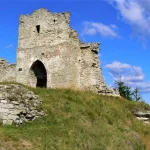
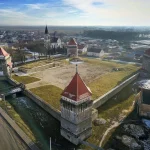
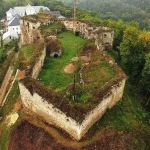
Nine miles from Rivne, between three spurs of the Avratyn Plateau, stand two ruins side by side: a castle and a church.
The castle dates to the 15th century. The church to 1710. Together, they span three centuries of Volhynian noble history that nobody protects today.
General Information
| What? | Description |
|---|---|
| Name | St. Lawrence Church (Wawrzyniec) |
| Location | Taikury village, Rivne district, Rivne Oblast |
| Coordinates | 50°31′55″N, 26°22′15″E |
| Distance from Rivne | ~9 miles (~15 km), via Kolodenka |
| Built | 1710 |
| Rebuilt | 1916 (architect Józef Dziekoński) |
| Style | early baroque |
| Commissioned by | Wawrzyniec Stanisław Peplowski (1652–1720) |
| Status | architectural monument of national (republican) significance No. 1520 (Council of Ministers of the Ukrainian SSR decree, September 6, 1979); ruins |
Taikury: a Town That Became a Village
The first written mention of Taikury dates to 1570. But by April 3, 1614, a charter from the Polish king Sigismund III Vasa — issued at the request of estate owner Yurii Vyshnevetsky — granted the village the status of a town under Magdeburg Law. This required building a fortified castle and religious structures.
The name “Taikury” is Polish in origin: “Tajne Góry”, meaning “Secret Mountains.” Another version traces it to the name of a monk who founded a monastery here, on whose site the church was later built.
The town flourished for as long as it remained a “favored project” of its owners. But from the late 18th century — due to its distance from trade routes, its isolation, and Russia’s annexation of Volhynia in 1795 — Taikury gradually declined back into a village. It’s a typical Volhynian story: a town that never quite became a town.
Today, Taikury has around 200 residents, along with a castle, a church, and an Orthodox church. All three monuments were built by the same owner.
Wawrzyniec Peplowski and the Legend of the Treasure
In the second half of the 17th century, Taikury passed into the ownership of Wawrzyniec Stanisław Peplowski (1652–1720), treasurer of Podillia and one of the most influential nobles in Volhynia.
Local legend explains the funding for construction this way: while out hunting, Peplowski’s hunting dog dug a gold treasure out of the ground. The owner took it as a sign of Providence and built the church in honor of his heavenly patron, St. Lawrence.
Legend or not, the fact is undeniable: in 1710, Peplowski built the stone Catholic church. The same owner also built the Orthodox Church of the Protection of the Mother of God in 1730 — which, unlike the Catholic church, remains active to this day.
A telling detail: above the church doors once hung an inscription listing the Peplowski family’s estates across the Kyiv, Volhynian, and Podillia voivodeships, along with the names of his wife, children, and subjects — a personal document carved in stone.
Architecture: Baroque Between the Hills
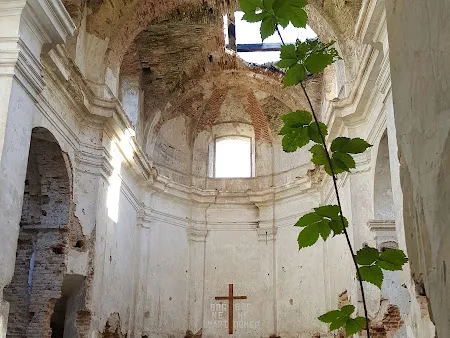
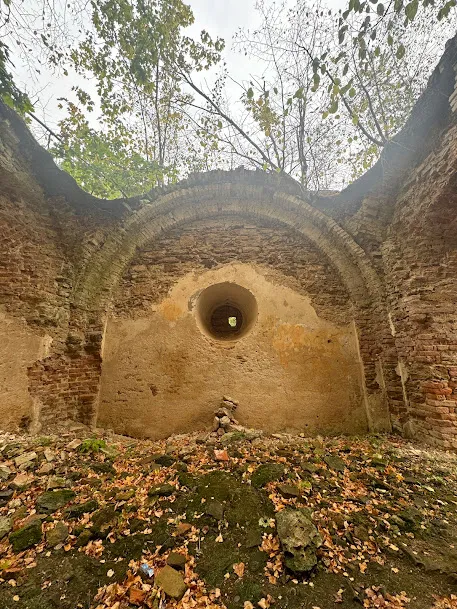
The church stands at the very heart of Taikury, between three spurs of the Avratyn Plateau. It’s a brick, plastered, single-nave building, oriented along the standard east-west axis.
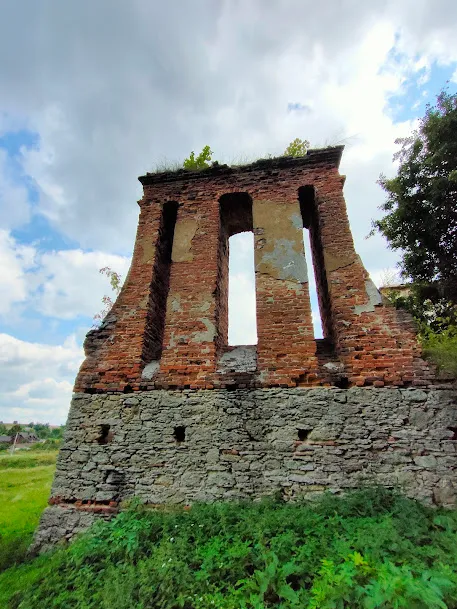
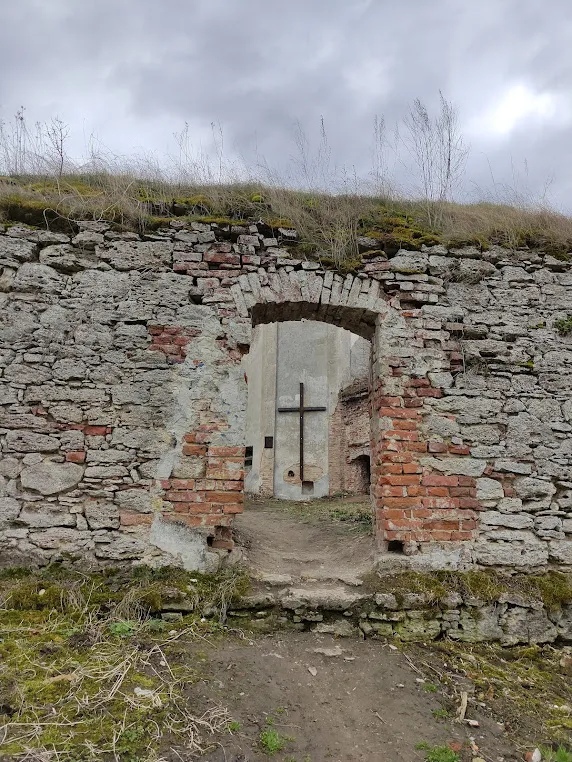
Its outer perimeter forms a massive wall with decorative arched niches — an almost perfect rectangle. The wall also served a defensive function, typical of Volhynian sacred buildings of the 17th–18th centuries.
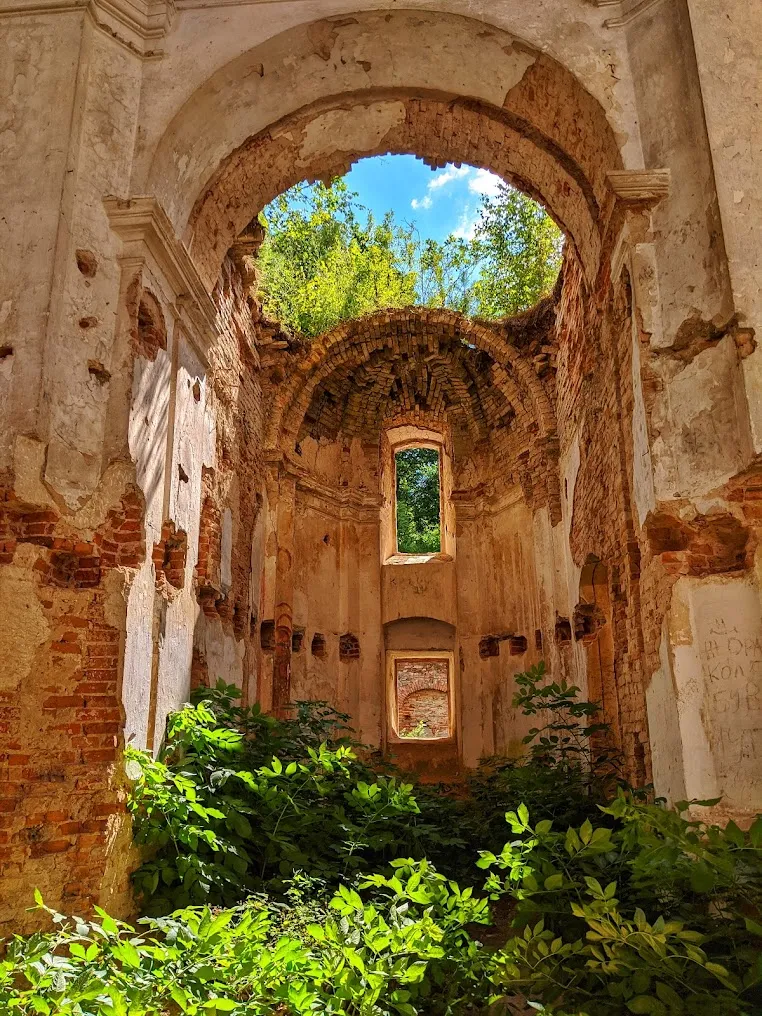
In plan, the building is cruciform, with a semicircular altar section and a narthex. Older sections adjoin the nave on the north and south sides. The church belongs to the group of early baroque monuments.
In 1706, the structure was damaged and subsequently restored. In 1916, a complete rebuild took place, to a design by architect Józef Dziekoński — one of the most active architects in early 20th-century Volhynia, known for his work in Lutsk and the surrounding region.
The Catacombs
Beneath the church lie crypts containing human remains. According to locals, the underground chambers reach the height of a person. Bones have been found there — evidently the remains of respected Taikury residents, buried in family crypts.
This isn’t a “horror legend” — it’s standard practice for noble sacred buildings of the 17th–18th centuries: burying family members and the parish elite in the foundation or crypt of their own church.
The catacombs are currently accessible but unstable. Don’t enter without a flashlight and caution.
From Monument to Ruin: What Went Wrong
In 1979, the church received the status of an architectural monument of national (republican) significance, under decree No. 442 of the Council of Ministers of the Ukrainian SSR, dated September 6, protection number 1520. The plaque still hangs there today.
But that protection remained on paper.
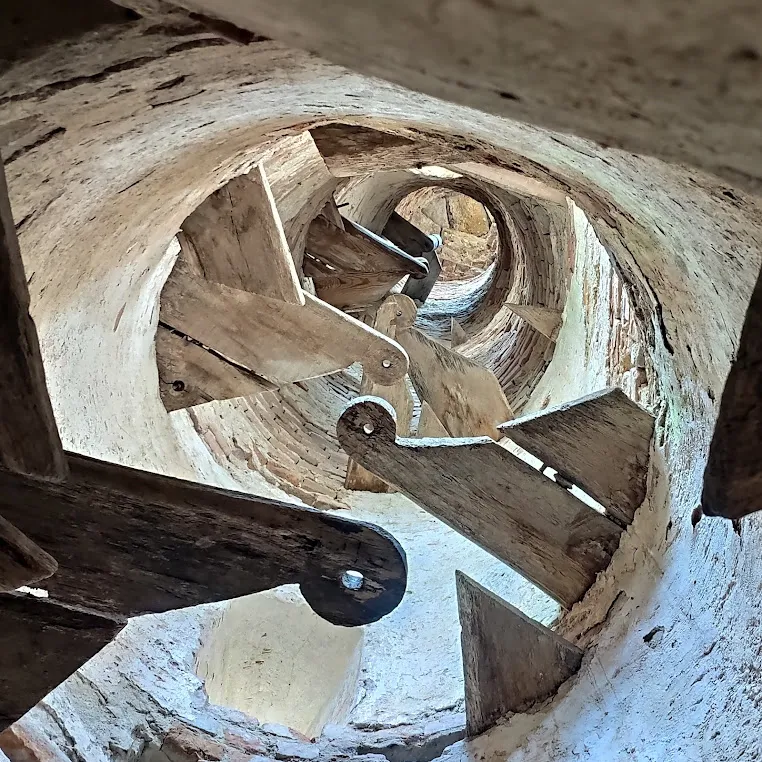
Today the church is a ruin — open, unguarded, unfenced. The walls stand, but the roof has partly collapsed. The human remains in the crypts remain where they were found.
Nearby are the ruins of the 15th-century castle — equally open and abandoned.
What to See in Taikury and Nearby
Taikury is one of the few places in the Rivne region where you can see a castle, a baroque church, and an active Orthodox church all at once — all three connected by one person and one era.
- Taikury Castle (15th century) — ~330 ft (100 m) from the church, on a rise above the valley
- Church of the Protection of the Mother of God (1730) — built by the same Peplowski, still active
- The Avratyn Plateau — a hilly landscape, unusual for Volhynian Polissia
A bus runs from Rivne’s railway station to Taikury, about 30 minutes; check the current schedule, as there are only a few trips a day.
Practical Information
- Admission: free, unguarded
- Condition: ruins — walls standing, roof partly collapsed
- Catacombs: accessible but unstable; bring a flashlight, don’t go alone
- Infrastructure: none
- Signal: available
- Time needed: 1–1.5 hours (church, castle, and the Orthodox church)
How to Get There
- From Rivne by car: ~9 miles (~15 km) via Kolodenka; the road is “reasonably decent” (as of 2019 accounts)
- By bus: from Rivne (railway station) to Taikury, ~30 minutes; confirm the schedule
- Church coordinates: 50°31′55″N, 26°22′15″E
Little-Known Details
- Wawrzyniec Peplowski built both a Catholic church and an Orthodox church — in the same village, for two different communities. A rare example of tolerant noble practice, or of pragmatically covering all his parishioners.
- The inscription above the church doors listed estates in three voivodeships — literally a public property registry for the Peplowski family, carved in stone above the entrance.
- In 1614, Taikury became a town under Magdeburg Law at the request of Yurii Vyshnevetsky — and remained one for less than two centuries, until the 1795 annexation halted its development.
- Napoleon Orda, the 19th-century Polish artist, captured Taikury in a lithograph showing both the living castle and the active church.
- Locals tell a story that the treasure the dog dug up was cursed — and that’s why the town gradually declined back to a village.
- The church holds the status of a monument of national (republican) significance — the highest possible status. And it’s a ruin.
Conclusion
Taikury is a place very easy to miss, and very hard to forget once you’ve been there.
The castle and the church are both abandoned, both unprotected, both slowly crumbling. But they were built by one person, who lived here in the early 18th century and tried to carve his name into stone.
A dog dug up the treasure. Time did the rest.