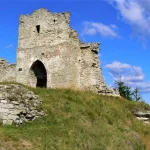
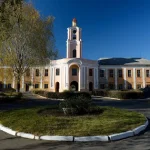
The barracks were built to defend against Turkish influence — and then designed in a Turkish style.
That’s neither irony nor a mistake. It was a deliberate architectural concept: an “oriental style” as a trophy, a symbol of victory over Turkey in the 1806–1812 war. That’s how a complex with Moorish arcading and octagonal towers rose on the bank of the Dniester estuary — built for the infantry of the Russian Empire, tasked with holding the new Bessarabian border.
General Information
| What? | Description |
|---|---|
| Name | Alexander Barracks |
| Address | 51 Shabska St., Bilhorod-Dnistrovskyi, Odesa Oblast |
| Coordinates | 46.192683°N, 30.360343°E |
| Built | 1829–1831 (contract signed February 23, 1829) |
| Contractor | Meir-Ber Leybovich Levit, a first-guild merchant of Chișinău |
| Cost | 197,000 rubles |
| Style | “oriental” (Moorish motifs) |
| Condition | ruins (after a 2007 fire) |
Merchant Levit and 197,000 Rubles
The barracks are named after Alexander I — but they weren’t built by anyone in his inner circle.
On February 23 (March 7), 1829, the Odesa Construction Committee signed a contract with Meir-Ber Leybovich Levit, a first-guild merchant from Chișinău. He undertook to build stone barracks by January 1 (13), 1831, for a price of 197,000 rubles.
Financial guarantors were titular councillor P. P. Horbakoni and Odesa merchant Christopher Velari. Akkerman (as the town was then known) had no wealthy contractors of its own at the time — hence the turn to a merchant from Chișinău.
By the time the contract was signed, Alexander I had already been dead for a year (d. 1825). The barracks were built and completed under Nicholas I — but retained the name of the previous tsar, since it was he who had signed the decree to fortify Bessarabia’s borders.
Purpose, and Why the “Oriental Style”
After the 1812 Treaty of Bucharest, Bessarabia passed to Russia. The new border needed a garrison, and the barracks in Akkerman became part of a system of border fortifications.
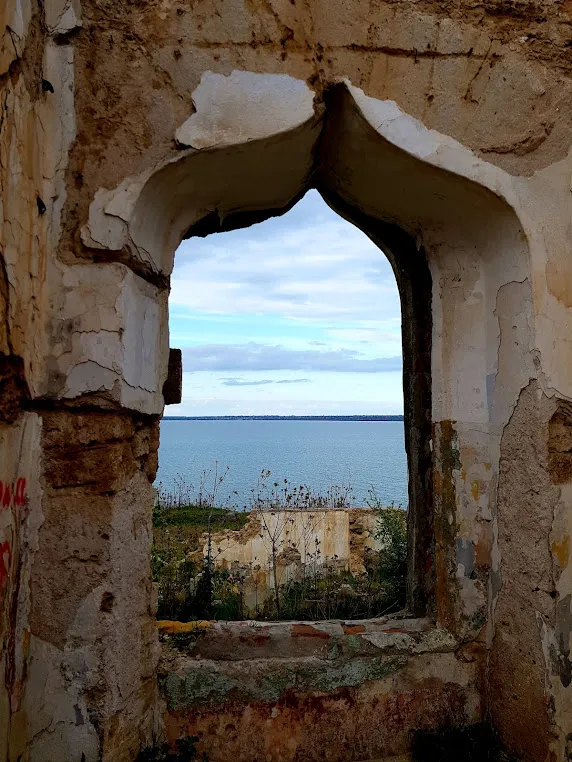
The architectural style — Moorish and Ottoman motifs — was a deliberate rhetorical choice: a reminder of victory over Turkey, and a display of the borderland’s “trophy” character. A defensive function, expressed in Turkish form.
The officers’ quarters and soldiers’ barracks formed a single complex. For 170 years — from 1831 until the unit was disbanded in 1997 — the buildings served their intended military purpose.
How the Barracks Became Ruins: a 30-Year Chronicle
1990s — a unit of Ukraine’s Armed Forces was stationed in the barracks.
1997 — the unit was disbanded. A small security detail remained.
~2000 — the military left for good. The complex was transferred free of charge to the communal ownership of Bilhorod-Dnistrovskyi.
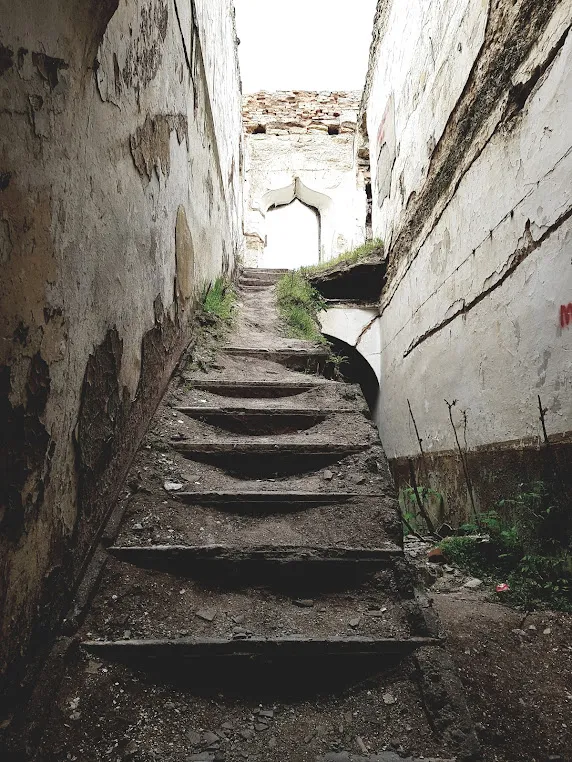
The city didn’t appreciate the gift: maintaining the monument cost money the city didn’t have. The emptied complex was gradually stripped by scavengers — windows, metal fittings, anything that could be carried off.
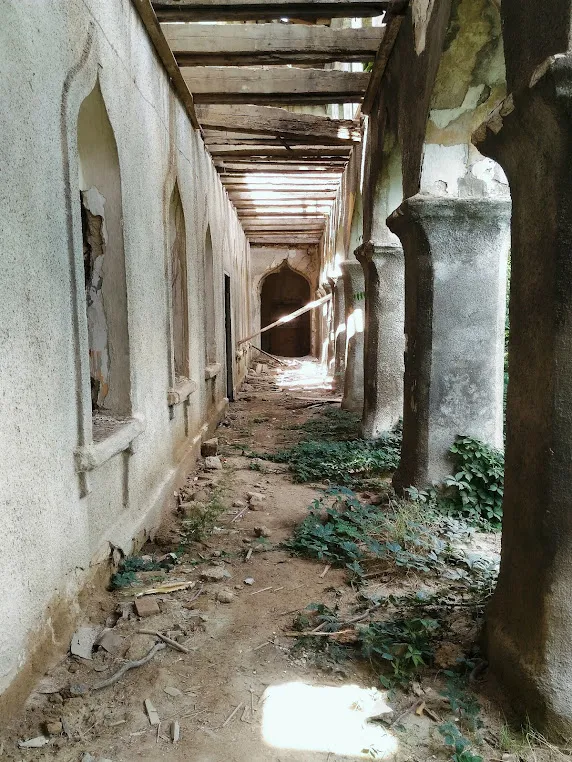
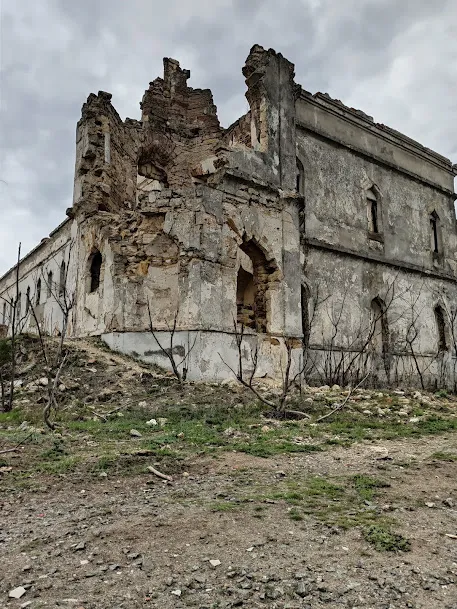
2007 — a fire. It burned for more than a day. The entire roof and three of the four corner towers collapsed.
2019 — another fire in the same area.
2025 — a structurally unsafe, neglected state. Ruins.
What Remains
Of the complex, the following survive:
- walls of the main buildings — partly to their full height
- one corner tower out of four
- Moorish arcading on the façades — the most striking element of the “oriental style”
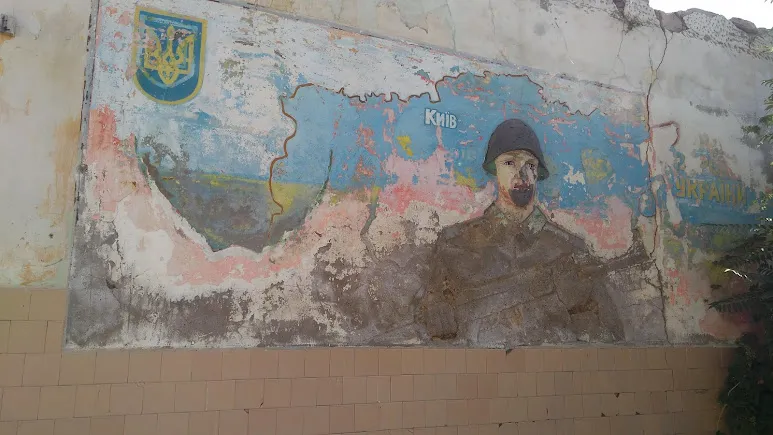
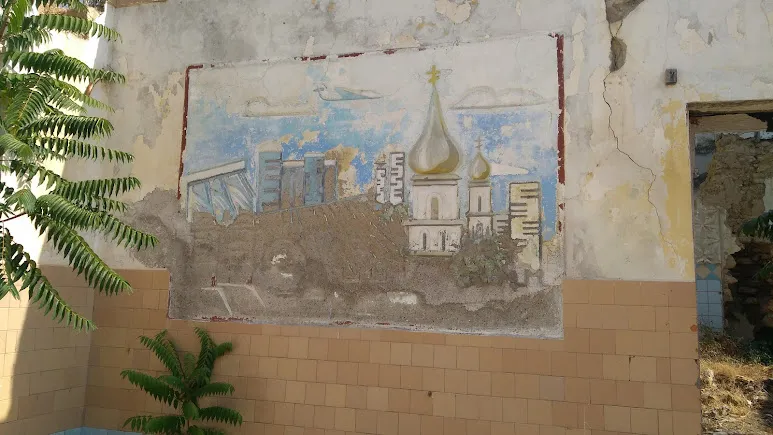
- remnants of the courtyard layout
This is an open site, unfenced and unguarded. Entry is unrestricted — but the structures are unstable.
What to See Nearby
Bilhorod-Dnistrovskyi is a town with an exceptionally dense heritage packed into a small area:
- Akkerman Fortress (~0.6 miles / ~1 km from the barracks) — one of Ukraine’s best-preserved medieval fortresses, 13th–15th centuries; the ancient city of Tyras, Genoese, Ottoman, and Moldavian layers
- The ancient city of Tyras (excavations) — 4th century BC, fragments in front of the Kiliya Gate
- The Greek church, 13th–17th centuries
- The Armenian church, 14th–15th centuries
- The Dniester estuary and the Buhaz spit
Practical Information
- Admission: free, unfenced
- Condition: structurally unsafe; exterior viewing is relatively safe; don’t enter the buildings
- Time needed: 20–40 minutes
- From Akkerman Fortress: ~0.6 miles (~1 km), walkable
- From Odesa: ~50 miles (~81 km) via the H33 highway
How to Get There
- From Odesa: the H33 highway via Ovidiopol and Maiaky (~50 miles / ~81 km, ~1.5 hours)
- Train/suburban rail: to Bilhorod-Dnistrovskyi station; then a taxi or a ~1.9-mile (~3 km) walk
- GPS: 51 Shabska St., Bilhorod-Dnistrovskyi; or coordinates 46.192683, 30.360343
Conclusion
197,000 rubles, a Jewish merchant from Chișinău, a Turkish style for an anti-Turkish fortress, 170 years of service, and 30 years of decline.
The 2007 fire burned for more than a day. Three of the four towers collapsed.
Only one still stands.